


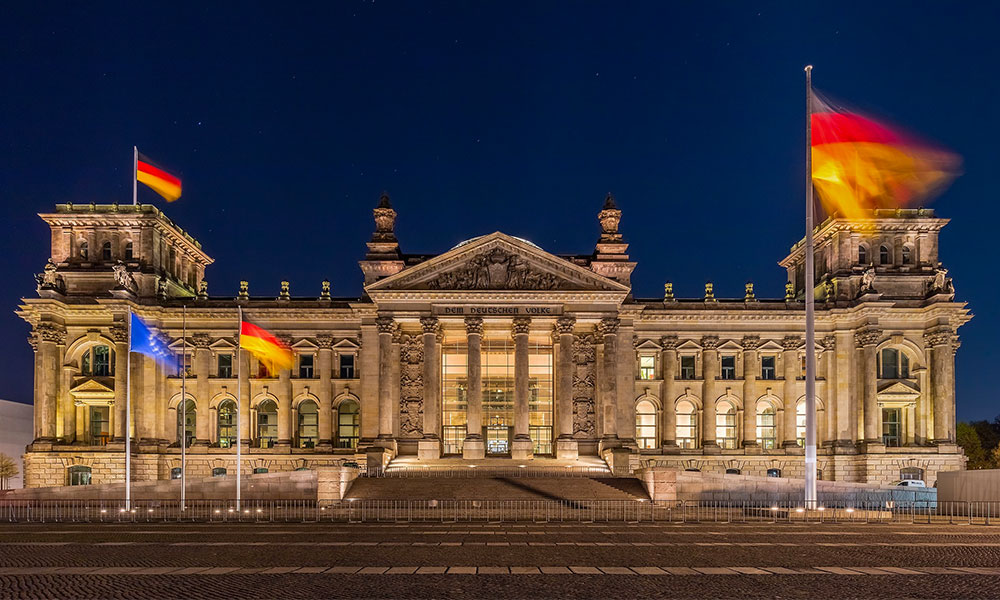
The legal international cannabis industry is expanding at a significant rate, with Germany serving as ground zero for global expansion. The European country is the top destination for medical cannabis product exports from other countries, having received over 201 tonnes of cannabis products from abroad in just the 2025 calendar year alone. Germany’s legal medical cannabis patient base continues to experience exponential growth year after year, and medical product import totals are reflective of increasing demand.
One of Germany’s top medical cannabis companies is Sanity Group. The German-based company recently made international headlines after it announced that it is being acquired by global cannabis industry powerhouse Organigram.
Finn A. Hänsel is currently the Managing Director and one of the founders of Sanity Group. He is also a board member of the Federal Association of German Startups (Bundesverband Deutsche Startups) and acts as a mentor for the start-up accelerator Techstars. Mr. Hänsel will be speaking at both the upcoming members-only Talman House investor event in Berlin and the International Cannabis Business Conference (ICBC), also in Berlin, next month. Below is an interview with Mr. Hänsel in the lead-up to the events:

- What motivated you to get involved in the medical cannabis industry?
I was the leader of the Young Conservative Party (“Junge Union”) in Northern Germany when a private experience changed my view about cannabis significantly. That was in 2003. Since then, I was a strong advocate of medical cannabis specifically and became an advocate of cannabis in general. I spent the beginning of my career in FMCG, management consulting (BCG) and building digital tech start-ups. But when then in 2017, the German government decided to regulate Medical Cannabis, I knew it was time to do what I am passionate about and build a company that will make a difference in European cannabis.
- You co-founded Sanity Group in 2018, when Germany’s legal medical cannabis industry was still very young. Looking back, how has the growth of your company and the wider German industry over the years matched up against your initial expectations?
Our initial business plans were much more aggressive than it turned out to be in reality. But then at the end, every startup starts like that and without that healthy optimism, probably no one would create companies. And especially in cannabis, the regulatory environment can turn out to be a rollercoaster: CBD novel food, medical cannabis, recreational cannabis, pilot projects, clubs, home grow – the environment can change very quickly depending on political majorities. But with the changes of 2024 in Germany, we are very happy and the market is developing very promising. However, there is still much regulatory work to be done!
- What are some valuable lessons that you have learned over the last 8 years that aspiring cannabis entrepreneurs should know?
Definitely resilience. Don’t give up when things are changing, but rather adopt quickly and make navigation through uncertainty your superpower. The reasons why entrepreneurs are winning so often against big corporates is speed, resilience, adaptability, anti-fragility and courage.
- You have founded and developed several companies, including non-cannabis companies. What strategies and skills from outside of the cannabis industry do you feel have helped your pursuits within the cannabis industry?
Tough one. Cannabis especially in healthcare is different from anything I’ve seen and at the core of the cannabis industry is not very digital. So especially in the beginning there was not much overlap from a business perspective. However, what I knew was how to build teams, create a vision, create brands and raise money from investors. Those skills that I learned during my tech start-up career helped me very much along the way.
- It was recently announced that Sanity Group is being acquired by Organigram, marking the most significant M&A news of the year. How did that deal come about?
First of all, a Venture Capital financed company will always look for an exit at some stage. That is just the nature of things as shareholders provide money to ideally generate a Return-on-investment.However, what is critical is finding the right moment and the right partner. When BAT invested a few years back, we were introduced to their cannabis ecosystem which included Organigram as their major investment to date. Over the years, we built a very good and trustworthy relationship with Organigram and we also believe in complementary skills and assets. When we then doubled our revenues for the second year in a row and turned profitable, we got the first inbound interest to acquire us from third parties. That was the moment when we decided to engage in discussions.
- What advice would you give to other industry leaders who have a desire to successfully complete an M&A deal?
Rome wasn’t built in one day. It is rare that especially in cannabis, you get your “once-in-a-lifetime” deal over night. Building trust, showing traction and proving value takes time and can rarely be rushed – so take your time to build a great business and prove that you have a good asset. In parallel, you should be very considerate of what you expect from a potential deal and what can be partners that are able to fulfill these needs. Especially in cannabis, the buyers universe is not large yet as traditional corporates (e.g. FMCG) are still shy to enter the market with large investments. So picking the right partner is crucial.
- What impact will the M&A deal between Sanity Group and Organigram have on your future endeavors?
I think both companies are a great match. We are 100% synergetic and will add to each others business operations. Organigram as the Canadian, domestic market leader in recreational cannabis, with a large high-quality production facility and great R&D capabilities, and great networks in Canada, Australia and also Europe. Sanity Group as one of the leading European players with great experience in Medical Cannabis, pilot projects in Switzerland and starting international business in UK, Poland and Czech Republic are a great match of capabilities. Sanity Group will still remain independent and will continue to work with cultivators outside Organigram – from that perspective, not too much will change.
- During the last year, medical cannabis opponents in Germany have worked very hard to try to reverse the nation’s industry momentum. How have you and your company navigated the ongoing political debate?
We are and have always been in very close contact with politics. Either through my own network or through industry collaborations or our medical cannabis association BPC. While we agree with some analysis of politicians that the industry overdid it in some areas (e.g. marketing), we are strongly fighting for a more modest new regulation that will not harm patients who finally have access to medical cannabis after years of self-therapy in the illegal market. The access for those patients need to remain convenient, otherwise we will lose them in the regulated market. But we also still fight for adult-use pilot projects – because only if consumers have access to clean recreational cannabis, the need to mis-use the medical way can be 100% eliminated.
- What do you consider to be some of the best areas of opportunity within Germany’s cannabis industry?
It really depends on how the regulatory framework will evolve. Every chance brings new opportunities. If you would have asked me a year ago, I would have said “teleclinics”. Now I think the market there is almost saturated and the regulatory framework at least under debate. Let’s see what this year brings and let’s discuss next year!
- How can Germany’s medical cannabis industry, and the laws and regulations governing it, be improved?
I always think about two major objectives:
- Everyone who can be helped by using cannabis as a medicine should have uncomplicated and convenient access to cannabis, ideally covered by the health insurance if the indication is strong enough
- Every adult who enjoys cannabis as a recreational drug, should be able to get clean and high-quality cannabis from a legal source with responsible distribution.
So if it would be up to me, I would regulate medical cannabis and recreational cannabis together in one go, but make sure that both are separated from each other: Medical Cannabis already has a good foundation, but mis-use should be minimized through better regulation of prescriptions (e.g. licensed teleclinics) and recreational cannabis should be available in pilot projects that help to generate data.
- Germany’s market is a very popular target for cannabis companies outside of Germany due to various factors. What advice do you have for non-German cannabis companies that want to enter the German market and collaborate with German cannabis companies?
Don’t go for the first partner that approaches you. Do your homework and understand how the market is structured and how the competitive landscape looks like and who the major players are. A lot of international cultivators we know were promised massive volumes and ended up being disappointed as those volumes never were realized – or in the worst case cultivators weren’t paid.
- How has adult-use legalization in Germany impacted medical cannabis so far?
We do not see any impact on medical cannabis through the adult-use legalization. But it’s also difficult as no numbers are generated and published for adult-use cannabis in Germany. We believe that there is probably misuse of consumers using the medical system but we believe that the large majority of today’s patients have medical reasons for using cannabis.
- You are speaking at the upcoming International Cannabis Business Conference (ICBC) in Berlin and are a longtime veteran speaker at the event. What are you most excited about for this year’s ICBC?
It is always an honor to speak at the International Cannabis Business Conference in Berlin, and something that I look forward to every year. There is no other conference like it, with a truly diverse international following. The event gets bigger and better every year, and based on what I am seeing online and in my in-person discussions with my industry peers, this year’s ICBC is set to be particularly outstanding. I am very excited about all of the new features added this year, such as the Medical Pharma Zone, Cultivation Pavilion, and Pharmacy Meet-Up. It is my understanding that there will be thousands of international cannabis buyers in attendance, along with most of the world’s largest licensed producers (LPs), and nearly all European and international wholesalers and distributors. It will be a wonderful opportunity to meet the top leaders in all of the world’s major markets and explore potential collaborations. I can’t wait to learn more about what my fellow major global leaders have to share, both through the ICBC’s dedicated networking opportunities and through the expert panels and presentations.
- Beyond Germany, which emerging cannabis markets are you excited about in Europe and why?
I think UK and Poland are still very interesting, followed by Czech Republic and Switzerland. France can be interesting depending on their regulatory framework. Slovenia has just launched a very progressive medical cannabis framework and Switzerland will most likely the first European company that is fully legalizing in 2028. So a lot of potential excitement over the next years with a lot of potential business opportunities for the industry and upcoming entrepreneurs.
- Where do you see Germany’s cannabis industry in 5 years?
I’m an optimist: I believe that we will keep having good regulation of medical cannabis. Besides, I believe that we will see pilot projects besides clubs and homegrow and lay the quantitative base to decide on the best regulation going forward based on the data we generate in the pilot projects. I see that we have the potential of up to ~2.0m patients and ideally another 7m legal adult-use cannabis consumers.
- Where do you see Europe’s wider cannabis industry in 5 years?
I hope that we will at some point see a consistent European cannabis framework for both medical and recreational. However, based on European bureaucracy and the time things take in regulatory topics, I believe that timeline is quite bullish. Therefore I would be happy if we have at least 3-4 large-scale medical cannabis frameworks outside Germany including a fully legal swiss market.
***
The Talman House is a members-only set of services connecting investors with top-tier cannabis startups and businesses. With a European focus, it gives its members a first-mover advantage in this newly developing market.
Members gain exclusive access to investment opportunities and expert insights, as well as entry to curated events like the upcoming one in Berlin next month. The events offer first-look pitches from emerging cannabis ventures, curated investor panels, and premier networking in a private, members-only setting, making them a rare opportunity to shape the future of the cannabis industry. Learn more at: https://thetalmangroup.com
Over 5,000 cannabis leaders from over 80 countries are expected to be represented at ICBC Berlin 2026, and that includes representatives from every sector of the industry, as well as leading international cannabis policymakers and industry service providers.
Thousands of international cannabis buyers will be in attendance at ICBC Berlin this year. In addition to licensed cannabis buyers, 90% of the world’s largest licensed producers (LPs) and nearly all European and international wholesalers and distributors will be present. The legal international cannabis industry has never witnessed a gathering of this magnitude and caliber. Learn more and register at: Internationalcbc.com/berlin.
